I had lessons in sign-language when I was 11-12 years old. My teacher gave me a sign-language name as part of my lessons. Making the sign for the letter ‘B’ I place my right hand to the right side of my forehead and make a curly movement with my letter ‘B’ out to the right of my face. This sign-name is combining the word for daydream with the first letter in my name.
I love daydreaming.
Jordan Peterson says that when you do something new you discover a part of you that you didn’t know was there. That’s a paraphrase of a much more extensive lecture he gave on the subject, but that was the essential message I got.
What part of myself is yet undiscovered? I want to find out. So, considering my propensity for day dreaming, and understanding that I can type quickly, combined with my deep rooted insecurities about disappearing in the mass of humanity without a ripple left behind, I will start writing stories. If I publish or don’t it doesn’t matter much, though of course I’d rather become a published author. What I want is to create something meaningful that comes from the uniqueness that is my combination of human aspects.
I spend so much time gazing up at the sky through the leaves and imagine another being enduring diverse adventures from worlds away gazing at such a sky with contemplation’s of great pith and moment. Perhaps I might be able to increase the joy and fullness of another person with such imaginations as well. I hope I discover that my true self can write stories that influence the world for good.
There are few things that astonish me greater in the world than to meet a human being who hasn’t seen The Princess Bride. It’s.. it’s… Inconceivable!
It may very well be the most quoted movie, at least in my family. Whether we are telling someone to do it Gently! or suggesting they give us a paper cut and pour lemon juice on it, there are so many situations in life that are reflected by the subtle irony portrayed in this film.
Today I’m hearing one such line in my head. “Life is pain highness. Anyone who says differently is selling something.”
My final week in psychology was dedicated to the concept of death. They taught us three terms to define the different aspects of death. Bereavement was the term used to impartially refer to the condition a person is in when someone close to them dies. Grief, obviously, was the feeling that was expected to come because of bereavement. Then mourning was the custom performed to signify that grief and bereavement. I have not yet experienced the kind of bereavement in my life which leads to significant grief or mourning, at least in this sense. So why was is so hard to read that chapter? Why did I feel grief so acutely during this last week? Why was I in pain and what was I mourning?
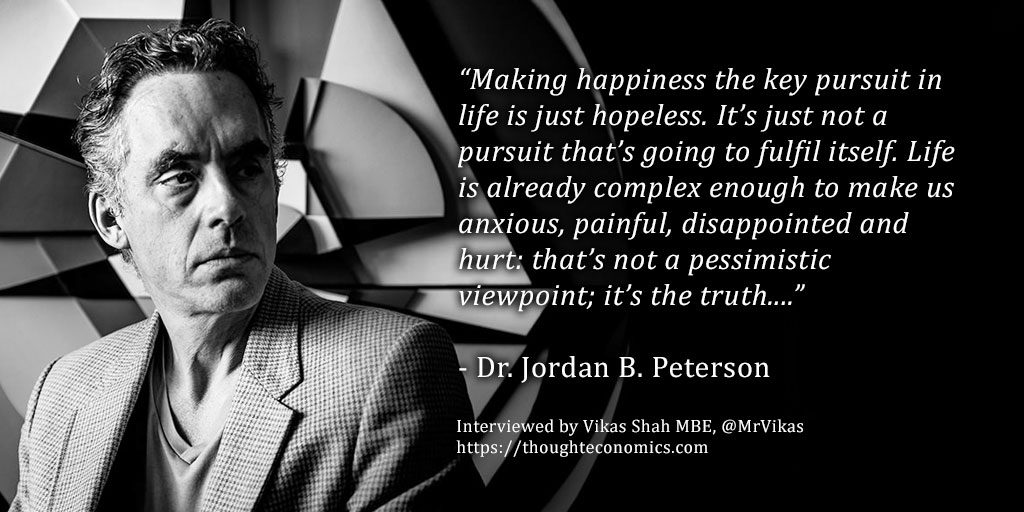
Jordan Peterson is a psychologist, author, and public speaker that I admire. His messages often focus on finding meaning in one’s life through sacrifice and by intentionally easing misery around us. I hear many such meaningful and good things from Dr Peterson, but he himself deals with crippling depression. I want joy in this life. How can I find it when life feels so meaningless?
In 2 Nephi 2:23 Lehi said that without opposition we “would have remained in a state of innocence, having no joy, for (we) knew no misery; doing no good, for (we) knew no sin.”
I believe that. It makes sense. If I had nothing but ice cream to eat every day, would it be a treat? Would I even like it? Of course not! I’m glad that I have understanding of suffering, loneliness, fear, fatigue, sickness, and misery. If I didn’t know how bad it life can be, how can I appreciate how good life can be?
So why can’t I feel the joy that I think I should have considering my knowledge? If I have to know the evil in order to know the good, does that mean that sometimes I have to be miserable, maybe for an extended amount of time before I can experience Joy?
David A Bednar taught that the Savior is the only source of enduring joy. The prophet Jacob said “The righteous, the saints of the Holy One of Israel, they who have believed in the Holy One of Israel, they who have endured the crosses of the world, and despised the shame of it, they shall inherit the kingdom of God, which was prepared for them from the foundation of the world, and their joy shall be full forever.” Alma also thought that we should have joy in this journey when he said, “…this because of the power of (Christs’) word which is in us, therefore have we not great reason to rejoice?… Now this is my joy, and my great thanksgiving; yea, and I will give thanks unto my God forever”
So, somehow I am supposed to feel this great joy primarily because of the promises given by virtue of the Good News, or gospel of Jesus Christ. Why then does my heart fail me? I don’t know. But as Jacob taught, I will continue to endure the cross of this world and hope for joy to come in the morning.
In the assigned reading this week author Bernard Poduska in his book Til Debt Do Us Part wrote about family rules, especially as they pertain to money management with newly formed family units. My mother was always the budget keeper in the family. To this day, we all know that if we make a purchase for mom, you keep the receipt because she will want it! My husbands family was more the hand-to-mouth style of financial planning. The moment they had money, they found something to do with it before it burned a hole in their pocket! When we got married, my husband and I both knew that having a budget and having self-control was a better way, and so far we have lived frugally and within our means.
Poduska also wrote about the significance of birth order and how oldest children vs youngest children deal with finances. My husband and I are both eldest children from large families. I read through the part of this book about the statistics of money management for the eldest children, second children, middle children and youngest children and conceded a definite reflection of truth, though not complete accuracy in our families. Poduska reported that eldest children had the inclination to be controlling and strict with money. While I can’t deny that we are frugal with our income, I’m glad we haven’t got what the author referred to as “an exaggerated need for control.” His suggestions for those who have a problem in this area are:
1. Bring financial matters into open discussion. As a family we discuss our money issues openly. The children know when and why money is tight.
2. Develop a financial management plan to enable all members of the family to have a say in the budget. Though I teach my children not to discuss the matter with other people, in our home any one may see the budget and balance at any time.
3. Give each member an allowance. We have tried to do this in our home several times and for us it has never worked in a dependable weekly set amount. Instead, any one who has either a want or a need is free to approach the subject of budget with requests. Anything from needed clothing items to the newest cool song they just heard from a friend, if it fits in the budget, it can be purchased.
Reading this weeks assignments and learning about money management types and trends was helpful to my husband and me. We got to evaluate what we were doing right and wrong and have productive conversation which influenced a change in a few things we were not doing well, and helped us feel good about the positive habits we had already created.
The best part about our conversations about our finances was that we recognized that we two had not adopted the totalitarian budget-keeping of my mother, nor the empty-pocketed propensity of his father. We truly had created a balance all of our own that, while not perfect, reflects our unique combined style and identity as a couple.
I spent many years as a youth working on construction sites with my dad. Sadly, I lived in a day when pictures were not so easy to obtain, so this is not a picture of a house my dad built.
But it does give you an idea about what it’s like to put trusses up for the roof. Those triangular pieces form the skeleton for the top of the house. The way we put them in place was for my dad to hold the truss in one place, my brother to hold in a second, and me in a third, then all three of us would walk together along the top of a stud-framed wall to the position for that truss. We needed balance. When one of us wobbled, the other two could feel it. With sensitivity we could feel through the truss when one person was leaning and instinctively make balance adjustments for the error. My father was much heavier and better practiced at this activity, and he was like an anchor for the two of his children when they, in their inexperience, leaned too far one way or the other. The three of us made two houses one summer and, thankfully, nobody ever fell off the roof.
This is not unlike the balance needed for a husband and wife as they learn to rule their kingdoms- you know, like the Province of Checkbook Balance, the Land of the Laundry, the Gulf of Dish-Doing, not to mention managing the inevitable uprising of peasantry at bedtime.
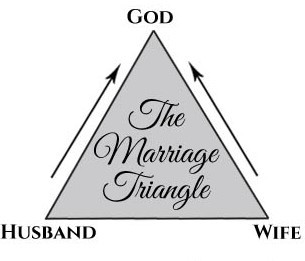
Like balancing a truss into place, a husband and wife precariously build a union one piece at a time. President Eyring taught, “He (Christ) made clear how the gospel of Jesus Christ can allow hearts to be made one. Those who would believe the truth He taught could accept the ordinances and the covenants offered by His authorized servants. Then, through obedience to those ordinances and covenants, their natures would be changed. The Savior’s Atonement in that way makes it possible for us to be sanctified. We can then live in unity, as we must to have peace in this life and to dwell with the Father and His Son in eternity.”
My father warned us about the dangers of setting trusses before we went out on the top of the framed house. And then, if he saw that we needed more instruction as we went along, he made sure to keep warning us. President Eyring also gave a warning about the dangers we are facing as we strive to create unity in our marriages and homes. He warned us of pride and of speaking ill of those with whom we are connected. He counselled us to be sure to keep the commandments, and qualify for the presence of the Holy Ghost. We also need to hold the truss at the same height. Like equally yoked oxen, the burden is carried best when two make a similar contribution. The truss goes into place at both ends at the same time.
It’s no simple thing building a house. I’ve heard many stories of people breaking or losing body parts, even dying because of small mistakes. Building an eternal companionship is not only a more difficult and complicated project, the stakes are higher, and failure will have eternal consequences. This balancing act is amazing, and dangerous.
I feel the danger in my own marriage. I wobble. He wobbles. If I spend my time reacting to my husband’s wobble I’ll fall. If I focus instead on my Savior and learn to balance from Him, I’ll be steadied. His balance is sure. I’m grateful for the continuing instruction I get through revelation and through the words of God’s prophets so that I can maintain balance in this dangerous, but worthy project of building unity in my marriage.
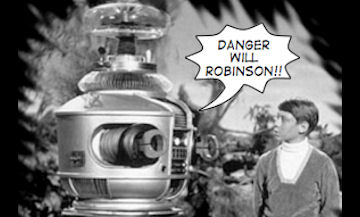
In my favorite version of Lost in Space, (the old black and white version) they had a robot that cried out “Danger Will Robinson!” This warning was sounded before the danger was eminent, when there was still time to escape or do something about the problem.
The term “red flag” is a warning for danger. At a beach there might be a red flag posted to prevent people from swimming in dangerous waters. We might also use the term “red flag” in conversation to imply a dangerous situation. Whether figurative or literal, the flag its self isn’t the source of danger, rather it signifies someone’s desire to make us aware of danger.
There is danger in treating our covenants lightly. The marriage covenant is especially vulnerable because it so closely concerns our hearts and feelings, and it is the only covenant that concerns more than one person and the Lord. My mother taught me that a married woman is never to allow herself to be alone with a man not closely related to her. The red flags of danger to covenants could include feeling attraction either physically or emotionally to another man, wanting to spend time or seeking out conversation with another man, keeping any actions (other than a surprise for him!) secret from your husband, favoritism, fantasies, or wanting to dress up for anyone else’s benefit, other than yourself or your husband. Of course, what is good for the goose is good for the gander. If any of these early warning signs appear for wife or husband, swift action and courage in the face of death, spiritual death, are needed.
Cowardice is not attractive. The champions of courage in the Bible and the Book of Mormon stand firm with faith unmovable. Daniel took the lions den, his three friends were thrown in a furnace. Abinidi was also burned, but not rescued. Gideon in the Bible fought a battle far outnumbered, and Gideon in the Book of Mormon didn’t flinch against his attacker even when he was bowed down with age. These examples teach us that whether we win or die, our decision to be courageous against oppression should not falter. Does our Father in Heaven ever tell us to run from a fight?
Joseph from Egypt ran.
In the case of sexual danger, running isn’t cowardice, it is courageous. You’ve surely seen the same scenario in movies and television, where the guy was accosted by a beauty and before he knew what was going on suddenly she was all over him, which of course set the wife/girlfriend/romantic interest, who happened along at that moment, into a fury. The story line will protest, “Oh but it wasn’t his fault! He was a hapless victim!” Yes, yes it was his fault. When this scenario comes up, a favorite comment in our house is “Danger Will Robinson!” Even my children can see that danger before it escalates. A wise man or woman will watch out for danger and avoid it like they would any other deadly accident.
In any battle, there will be times when the commanding officer orders the troops to retreat. Strategic retreat is not cowardice. In my marriage, I watch diligently for the red flags of danger and avoid even the appearance of evil, and take myself away from situations before the danger becomes imminent. As Dr Goddard said in his book Drawing Heaven into your Marriage, “Satan’s lies are extravagant- but empty… God’s promises are sure. When we, like Joseph, quietly honor our covenants- even making sacrifices and fighting temptation- God will reward us with blessings unfathomable…”
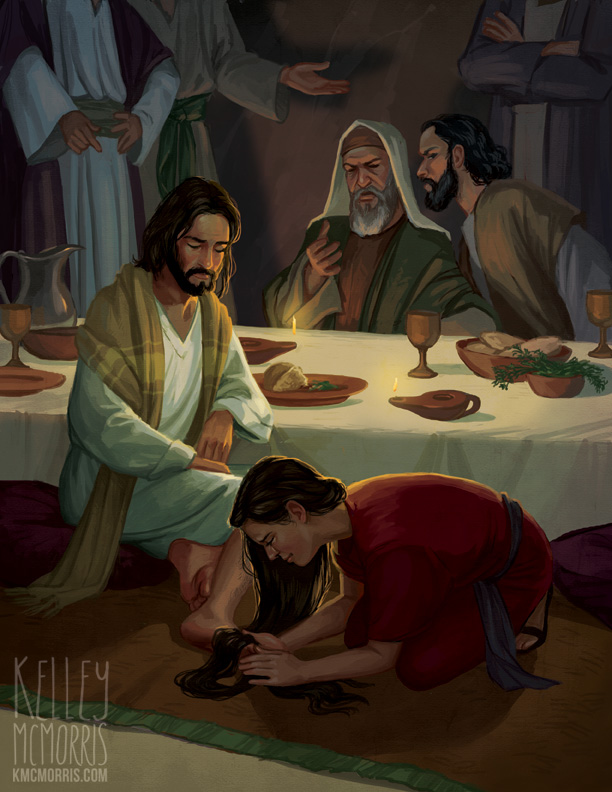
In the last chapter of the book Drawing Heaven into Your Marriage, by Dr Goddard, the author retells the story from Luke chapter 7 in the Bible. Simon, a pharisee, invited Jesus to dinner with him. While at dinner a woman with a bad reputation came in uninvited and began to wash the Saviors feet with her tears, weeping for her many sins and undoubtedly hopeful for consolation and forgiveness.
Simon not only judged the woman as unworthy to be in their presence, he judged his guest for tolerating it.
My husband is a recovering addict. Eighteen of our twenty years of marriage have been overshadowed with addict behaviors, lies, gas-lighting, along with other struggles that came because of his addiction such as financial burdens and social shame. Though he has been 2 years clean of his addiction, and though our relationship is better than it’s ever been before, though he is taking on adult responsibilities with a new vigor that I’ve never seen, I still find myself at a loss sometimes.
I know what kind of things he’s done. I know how far my husband has fallen. It’s ugly. It’s painful. It isn’t for worldly glory that I object to his touch at times, but it is with awareness for how filthy he has been. He’s making a change, and I love it! But how can he ever make up to me the lost years? How can he ever compensate me for standing by him as he took our family through this darkness?
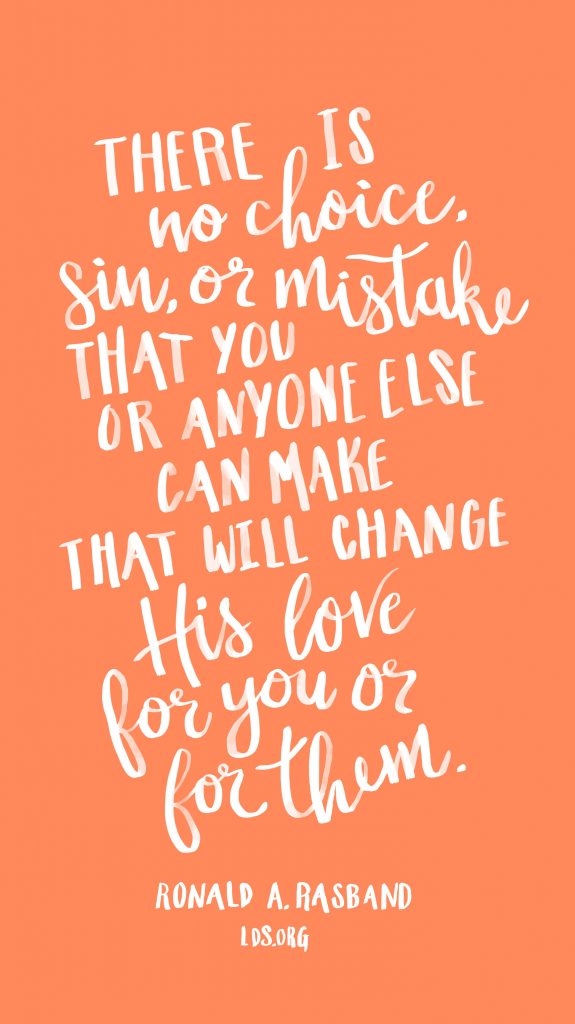
I want to be like my Savior. As I read this week’s assignment I recognized that one way to be like the Him is to unconditionally love someone who can not repay you. Christ won’t stop loving me, He won’t even change how much or how well He loves me. Elder Ronald A Rasband said, “There is no choice, sin, or mistake that you or anyone else can make that will change His love for you or for them.” I’m so deeply grateful that my Savior doesn’t ask me to pay back what I owe Him, because I couldn’t. It’s beyond me like jumping to the moon with a trampoline is beyond me.
My husband isn’t able to change our history and he isn’t able to compensate me for the years of loss. As I reflect on what I’ve learned, I realize I don’t want him to anymore. It was part of my lesson and a dangerous path to self-realization for the both of us. Not everyone will be able to save their relationships from the ugliness of addiction. In fact, I recognize that my husband still has agency and may some day return to it. But it doesn’t hold me captive anymore. I can love without expectation better than I could before, and if that was the cost of being like my Messiah, then the cost was not too high.
As Christ said in Luke 7:42 “When they had nothing to pay, (I) frankly forgave them both.” I have nothing to pay, my husband has nothing to pay, no one can pay. That was the point of needing a Savior in the first place. Christ sought to understand the woman who wept on His feet, He also sought to understand the pharisee. I will continue to seek understanding rather than compensation from my husband and all those whom I love.
My son didn’t enjoy church yesterday. He is 12, almost the youngest in his class, and (how shall I put this?) not the most socially adept. He is experiencing an ongoing problem where the young men in his class have boisterous conversation, he tries to join in, but not in the best of ways, and they react poorly to his attempts. He feels the anguish of being left out and having less acceptance with his peers. Yesterday after church he brought his pain to me once again, as a child will. I’m glad he can bring me his pain. But what I gave him wasn’t what he wanted, at least at first. I listened, I reflected and validated his feelings, and then asked him what could be done.
“Should we tell the bishop about them?” I asked.
“Well, no”
“Should we complain to your teacher?”
“No.” He began to get exasperated.
“Should I come to class with you and make sure the conversation goes well?” I asked with obvious humor.
“Oh yeah!” He said with humor back. “My mommy is going to make you be nice!” We laughed about imagining that. Then I stopped the rhetorical questions. I told him the repair was all up to him.
“Why do I have to fix it?” He wondered. “They are the ones doing wrong!”
“But you and I don’t have any power to change them, you only have the power to change you.” Together we came up with new ways for him to behave to avoid conflict and negativity. We will see how it works out.
I don’t have the ability to change my spouse. Only he does.
A marriage where each party gives a fair 50%, is a marriage doomed to failure. It’s been said that a husband and wife both need 100% dedication to a common cause in order to succeed. So what happens when the “other spouse” isn’t giving their all, or perhaps, is giving 100% of something we don’t like or don’t want? How can we meet in our marital middle while still giving our all?
In John Gottmans book The Seven Principles for Making Marriage Work, he says, “You will not be able to compromise successfully if you don’t accept your partner’s flaws and foibles. Instead, you will be on a relentless campaign to alter your spouse.”
Perhaps the key to working it out is giving our all, and accepting what our spouse gives as their all, in their own way. Though there are circumstances, such as abuse or infidelity, that supersede this patient and forgiving mentality and may require separation or divorce, perhaps making this three way covenant between God and one of His children deserves more dedication than “Until discontent do us part.”
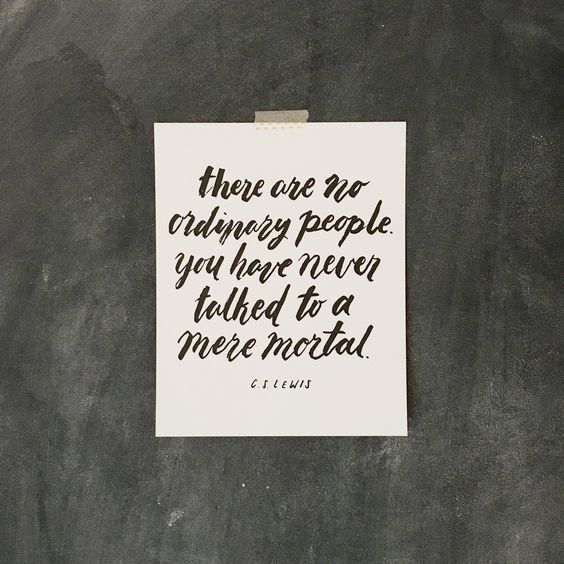
CS Lewis said, “There are no ordinary people. You have never talked to a mere mortal. Nations, cultures, arts, civilizations – these are mortal, and their life is to ours as the life of a gnat. But it is immortals whom we joke with, work with, marry, snub, and exploit…” Though we have a veil drawn over our memories and can not with our eyes see the resplendent nature of our spouses, if we can keep the perspective that our covenants are worth negotiating the toilet seat, the diaper duties, and the checkbook, then our inclination will be to consecrate ourselves to a marriage through its tumultuous days.
As I counseled my son, so I do also. If there is a problem, I make my change for the better. If my spouse decides to do the same, however much and in whatever way for the better, then I’m happy to keep that change too.
Is this the hill you want to die on? Marriage is like a battlefield. Not because spouses fight, though sometimes they do, but because the unseen forces of evil want to destroy the strongholds of their enemy.
One day at church the class discussion was about Adam and Eve. A question was put forth: Would you leave paradise for your spouse? Many comments issued forth and the conversation began to wax philosophic. Would you leave a good job for a spouse? Would you leave your parents for a spouse? Would you leave the town your grew up in? What about the church? A man piped up and with passion and conviction established that he would never leave the church for his spouse. He emphasized that he would chose the church over his spouse every time. His fervor pretty much put the conversation to an end. Less than a year later he and his wife divorced.
Now I’ll tell you about my friend Mr Bauman. Mr Bauman was raised Lutheran, converted to Baptist, then converted to Mennonite. He married a Mennonite woman, and they have a beautiful family. Then one day Mr Bauman read the Book of Mormon. Big mistake! (sort of) In our ward we lovingly refer to him as Brother Bauman because we all know that he is convinced that the Book of Mormon is the Word of God and that our church is the church authorized by Jesus Christ. But his wife does not want to be shunned by her family. So instead of leaving his wife for a perceived paradise of faith, he chooses to stay a Mennonite and be with his Eve.
In Stake Conference last year, our visiting general authority asked the adults in the adult session to consider whether it was more important to be happy or to be right. So what if your point of view is correct and your spouse is dead wrong? What if your solution or your perspective actually was the way things really ought to be? Would you rather be right or happy? Pride fools us into thinking that somehow we are most often right.
Dr Goddard said in his book Drawing Heaven Into Your Marriage, “Each of us thinks we see the world directly, as it really is. If [others] don’t agree, it follows either that they have not yet been exposed to the relevant facts or else that they are blinded by their interests and ideologies .. . . Everyone is influenced by ideology and self-interest. Except for me. I see things as they are.” He goes on to affirm that, “The natural mind is an enemy to truth. Each one of us sees our own versions of “truth” and imagines that no one in the world sees truth as clearly as we do. This way of thinking is a pernicious enemy. It keeps each of us from connecting with others and from being taught by God.”
The first brother I spoke about was a priesthood bearing member of the true Church of Christ, but I think Brother Bauman is a better example to me of humility. He doesn’t need to force his wife to see that he is right, he would rather be happy in his life with her. It is important to make the distinction between happiness and self-gratification. True happiness comes from living righteously. If I want to be happy in my own marriage, I will be more concerned with being happy than being right.
The saying goes, “What’s good for the goose is good for the gander.” Here are the geese down at my mother’s farm.
Being on a farm, observing the different temperaments of the animals, inspires in me introspection on the subject of relationships between males and females. The philosophies on the proper roles of men and women have great variety. There are tribal peoples that believe men and women should all live separately, and Christian sects that consider the highest righteousness to be celibacy. There are evolutionary beliefs that profess that rape culture is natural, and some extreme religions who subjugate or blame all women for the original sin and fall of man. For myself, I like the words of Elder Bednar who said, “The natures of male and female spirits complete and perfect each other, and therefore men and women are intended to progress together toward exaltation.”
A popular relationship book from the 90’s was entitled Men are from Mars, Women are from Venus, by John Gray, PhD. In this book the author explains the differing communication modes and thinking styles of men and women, suggesting that men and women are radically different creatures. But in a study by Lauer and Lauer in 1986, 351 couples, married 15 years or longer, were asked for the criteria of a great marriage. Without coordinating beforehand, the first four items on a list of most commonly picked reasons for having a great marriage for both men and women were 1. My spouse is my friend, 2. I like my spouse as a person, 3. Marriage is a long-term commitment, and 4. Marriage is sacred. After that the lists diverged in items or rank of importance for men and women. So perhaps men and women are not so different after all?
The two geese on my parents farm may look similar, but it’s not too hard to tell the male and female apart. The male is slightly larger, but more than that, their behavior is different. The male will position himself between the female and anyone too close for comfort. The male also is more likely to be bold and come closer to people out of curiosity. The female I more often see grooming the male or herself, and her curiosity leads her to inspect corners and underneath shelving. Why are they different? Is it just personality, or is there a deeper nature involved?
Principle #7 in the book The Seven Principles for Making Marriage Work, by John Gottman, is to Create Shared Meaning in a marriage. How can two different creatures create a shared meaning in their lives?
The geese are never apart. Though he watches the humans and she looks under shelves, they are never far from each other. Where one goes, the other follows. They forage, they swim, they sleep, they waddle to and fro. Though their behaviors differ at times, they have common goals that keep them together.
So which is it? Are men and women basically different or basically the same?
I would say to both questions: YES.
Sister Linda K Burton said, “Seek to complete rather than compete.” The world philosophies of today emphasize enmity between the sexes. They demonize men and objectify women. But what is good for the goose is good for the gander. Creating common goals doesn’t need to diminish or demolish either party’s views or interests. Men and women can both totter around in life honking and investigating in our own ways and still have good friendships and a combined meaningful life.
I lived in a rural Alaskan village for a few years. The town didn’t have running water except at the one and only gas station. There was a community well from which we hauled our water in buckets for drinking and cleaning.
The Well House
Oh how pungent the outhouses were in the summer and how delightful it was to sit on a pee-soaked seat at -50F in the winter! (I had brothers. They didn’t have good aim.) The only eligible men were regional bushmen who ate garlic in sufficient quantities to keep the mosquitoes off naturally and who slept with their dogs. (Think wet dog and garlic flavored man odor.)
Even the dog thinks you smell bad.
Getting there was difficult too. The Taylor Highway is the only road in or out. It was entirely gravel and took four hours of driving in optimal conditions.
It stank, it was rough, it was isolated, it was always cold and I could never quite feel clean no matter how well I used the sponge and bowl of water behind the curtain.
But it was beautiful.
I wouldn’t trade the experience for anything. Though I hated being there, and was glad when my time there was over, the experiences I had while living there changed me, perhaps more than any other place that I lived.
My marriage is not unlike my stay in that Alaskan village.
Some aspects stink. Being married to a porn addict could be compared to garlic and dog flavored man sweat or outhouses. It’s isolated. I have had few people to share my burden with. Porn addiction is not something I can share with just anyone. It will likely taint how people treat me and my husband forever after. There are times when no matter how I prayed, partook of the sacrament, studied or repented, I could not feel clean inside. I hated being in those years. Living through that heartbreak has changed me, more than anything else in my life.
So I have this choice to make. Do I dwell on the stink, or the beauty? Do I pang for the years lost to isolation or take the wisdom gained and make something of it for the future?
I decided to look at the beauty.
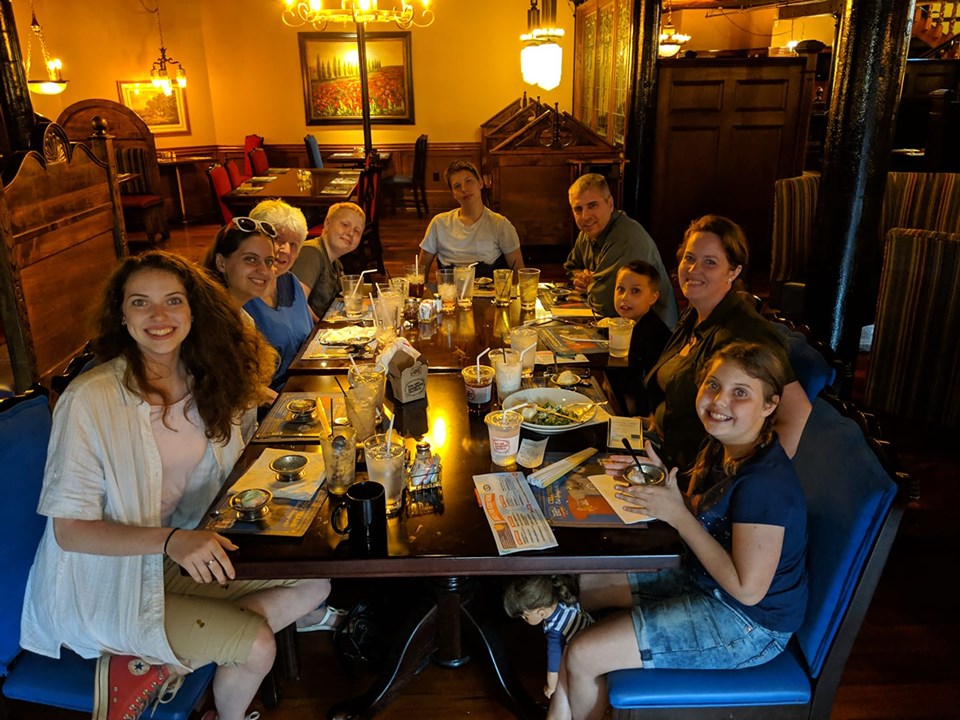
Whole family out to lunch!
The village that sits on the Yukon River, near the mountains, and with such remarkable beauty of the place and even of it’s people is unique, even for Alaska.
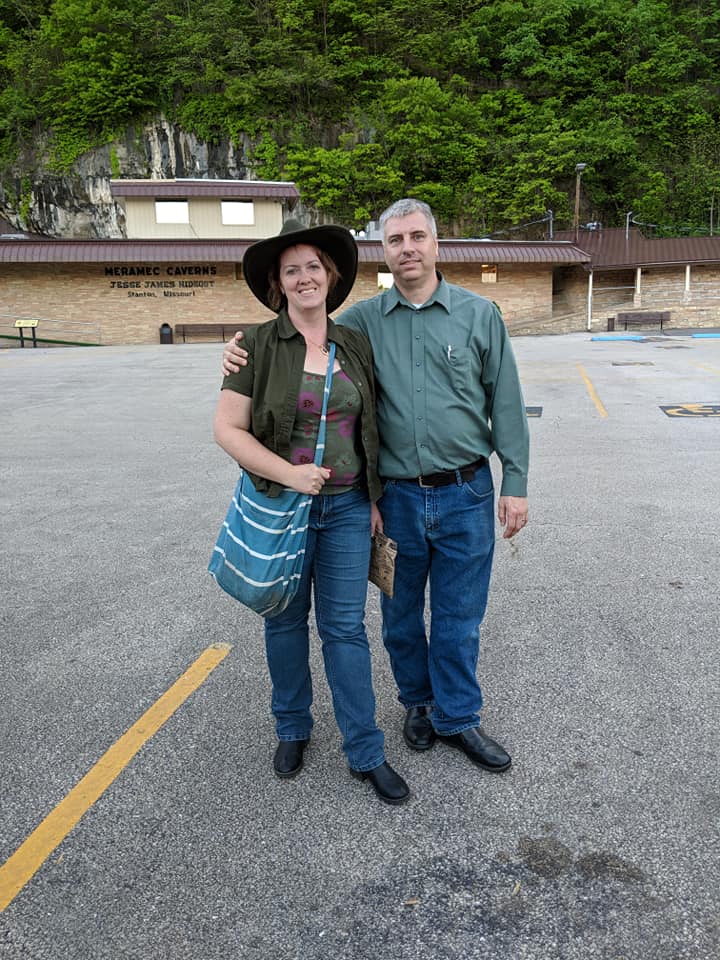
This man and I have so much in common. Our history together, our children, our common dreams and hopes. I don’t want to give that up.
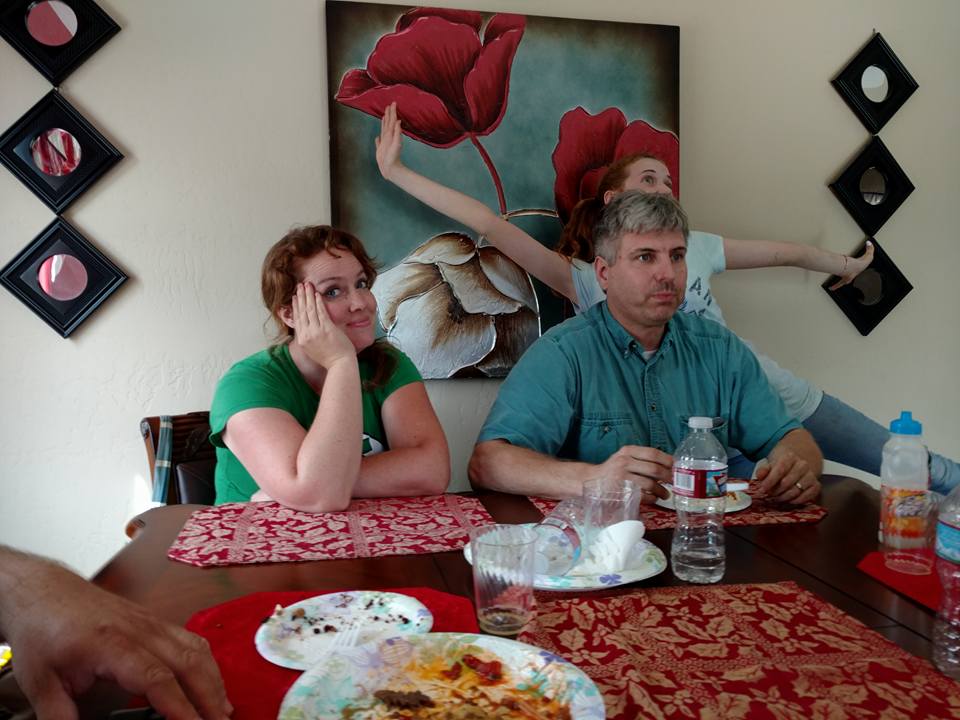
Is that art or a clowny child in the background?
I don’t want to go back; either to the small Alaskan village or to the days of darkness. But I find that who I am and especially who WE are becoming together is valuable.
Dr Gottman says, “Getting to know your spouse better and sharing your inner self with you partner is an ongoing process. In fact, it’s a lifelong process.” Dr Gottman’s first principle for Making Marriage Work is to create a Love Map; a sense of knowing each other. My husband and I have history together which I think is creating points on our map. Not everything on the map is a scenic vale. But the whole picture together is turning out beautiful. I’m glad I’ve made it this far on the adventurous road.